Lullaby – Leïla Slimani: Lavinia’s Book Pick, September 2018

Lullaby is the story of the murder of two young children by their nanny. That’s not a spoiler – that’s how it opens. It’s tense, tight, and enigmatic throughout. There’s a light touch about the writing, from the moment the middle-class but middle-eastern lawyer mother goes to the nanny agency and is treated rudely by the agent – until she realises she’s a potential customer, not a potential employee. An acknowledgement that bigotry is an everyday event for those who face it. The passing frustration, too, of the mother Myriam, re-entering the world of work, is deftly captured.

lullaby.jpg

It doesn’t offer too much, or explain too much. We see the crippling poverty of the nanny, Louise. The way she is afraid to say no to anything. But the requests of the parents are just requests, and though they treat her as an employee, they’re not exploitative or demeaning. The children are ordinary children – with charms and challenges. It’s a mystery where we know exactly what happened at the start, but little about why it happened, and the answers aren’t easy or comfortable.

You’ll love this book if: 
– You like complex, ambiguous characters
– You like a naturalistic ‘slice-of-life’ style – it’s a snapshot into upper-middle-class Parisian life
– You like a super-French aesthetic – think cigarettes all the time and dinner party conversation about people’s sex lives

You might want to avoid this book if:
– You find stories about children getting murdered upsetting

Tweet me here: @lavinia_collins
And find me at my blog here: laviniacollins.com

lavinia collins authorLove Lavinia xoxo
Find this book on Amazon!

The Music Shop – Rachel Joyce

Rating: 4.5 stars

Rachel Joyce is one of my favourite contemporary authors – I absolutely loved her recent collection of short stories, A Snow Garden, reviewed here earlier this year, as well as her three previous novels. She has the ability to make her characters feel utterly believable, so that readers become totally engaged with their lives, at times delighting in them and at others infuriated by them, just as we all are by friends and acquaintances. And, given that I also love listening to music, the idea behind The Music Shop instantly drew me in.

The hero of the book is Frank – a “gentle bear of a man” who owns a music shop with a difference.

His shop was often open into the night – just as it was often closed in the morning – music playing, coloured lamps waltzing, all sorts of people searching for records. Classical, rock, jazz, blues, heavy metal, punk … As long as it was on vinyl, there were no taboos.

the music shop.jpg

Frank’s passion is music and he has an instinct for what music each customer or acquaintance will love or what each of them needs, when they themselves are often looking for something completely different. This unusual ability makes him a wide range of friends, who even include Henry, the bank manager who then offers him a loan and full business support for many years.

The Music Shop opens in January 1988, at a time when cassettes and CDs were rapidly replacing vinyl, with vivid descriptions of Frank and his shop, and of other shop owners and residents of Unity Street, including Maud the tattooist, Father Anthony who sells religious mementoes, the Williams brothers who run a long-established family funeral business (they are so touching in their love for one another – they “sometimes held hands like children”). Then there’s kind-hearted, well-meaning and generous Saturday Kit – “if you treated him like a young terrier sending him out for regular walks and occupying him with easy tasks, he was less liable to cause serious damage”. Rachel Joyce brings them all fully to life, so the reader has an understanding and appreciation of this little community, increasingly isolated from the changes happening within their town. Unity Street is under threat from developers and one by one the band of friends is broken apart.

When a stranger, Ilse Brauchman, walks into their lives (or, rather, falls, since at their first meeting she passes out), I initially found it hard to feel any empathy with her. Then I felt that she was supposed to be different and slightly odd and jarring – had we met the residents and shopkeepers of Unity Street one by one over many chapters, they would surely each have felt just as unusual. Frank’s long-established patterns of behaviour are broken apart by the threat from the developers, by the pressure being exerted on him to give in and sell CDs and cassettes, and finally by this chance encounter with Ilse. He arranges to give her music lessons each week in a cafe by the cathedral, The Singing Teapot, whose waitress is a gem of a character, watching Frank and Ilse’s weekly music lessons, shifting from reluctantly serving them tea or orange squash, over the weeks graduating to cooking them increasingly elaborate meals (she has “a potentially lethal passion for amateur cookery”). And at the same time as we are engrossed in the 1988 struggles in Unity Street, we also learn more about Frank’s highly unusual upbringing with his mother, Peg, and understand that he needs to have change forced upon him to heal ancient wounds.

I really enjoyed most of The Music Shop, all set firmly in 1988, but did initially have problems with the final section, entitled “Side D: 2009”, in which the action leaps forward by over two decades and resolution is needed for Frank, Ilse and other leading characters we’ve come to know, including Saturday Kit, who’s no longer a hapless teenager, prone to crashing into things, but a local radio DJ, a bit like Frasier but with music – Late Night Surgery. This closing section brings them all back together to heal Frank’s emotional wounds – but in a way I found at first a little too contrived. But then I thought again about the ending section – Hidden Track – with its warm glow at the reuniting of these wonderful characters! It’s a bit like a modern-day fairytale. Suspend disbelief, sit back and enjoy the music!

Daisy Chapter and VerseReviewed by Daisy

Find this book on Amazon

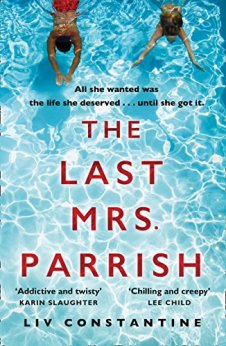
The Last Mrs Parrish – Liv Constantine

Rating: 4 stars

the last mrs parrish.jpg

The Last Mrs Parrish, by a sister writing duo who work under the name ‘Liv Constantine’, is a sort of Rebecca-in-reverse; we begin by following the shallow and ambitious Amber as she goes about her plan to steal Daphne Parrish’s rich husband. Amber’s pretty much a caricature – proud of herself as a gold-digger, sneering at the very world she covets, and always throwing ‘cutting’ asides about her hokey small-town life. Likewise, Daphne obligingly fulfils the other half of the Madonna/Whore dichotomy – a hard-working young woman from a modest background whose life’s work has been establishing a cystic fibrosis charity in honour of her sister, who died of the disease while still young.

This book is exactly what you’d hope it would be – lists and lists of designer items, and plenty of plotting, scheming and snobbery. Some of the writing could have been finessed – there are a lot of descriptions of clothes, and at one point a character ‘blow-dries her wet hair’ which is a personal bugbear of mine (who would dry their already dry hair? why do we need to know this?) – but if you want big drama in broad strokes and a satisfying payoff, this is the book for you.

There was a little to be desired in nuance – Big Little Lies this ain’t. But if you’re hoping to read about rich people (and wannabe rich people) tearing each other to pieces, then enjoy, enjoy, enjoy!

Louise CAV ReviewsReviewed by Louise

Find this book on Amazon

Big Little Lies – Liane Moriarty

Rating: 5 stars

Big Little Lies was a birthday gift for which I am extremely grateful. I was totally hooked from start to end, and it’s a book that starts (very nearly) at the end of the story, then works back through past events to reveal what’s led to it.

The first character we meet is the gloriously named Mrs Patty Ponder (and her cat Marie Antoinette), observing the events at Pirriwee Public School with an unbiased eye from her house overlooking the schoolyard. And she lands us straight into the heart of events:

‘That doesn’t sound like a school trivia night… That sounds like a riot.’ She could hear people shouting. Angry hollers crashed through the quiet, cold night air… It was a strange sight…

Pirriwee’s trivia night is no ordinary school fundraiser but also a fancy dress occasion, with the women dressed as Audrey Hepburn and the men as Elvis. And some of the many incarnations of Elvis are punching and fighting, as Mrs Ponder hears the wail of approaching sirens and the screams from the school balcony.

Instantly we get a really vivid picture of the events of this fateful night, and this is reinforced by voices of other people who were present, such as Gabrielle, Bonnie, and Stu, giving us their spin on what happened and clues as to what led to this fight, such as “the incident at the kindergarten orientation day”, “the French nanny angle”, “the head lice”, and “the Erotic Book Club”. Then suddenly the voice comes from an outsider:

Detective Sergeant Adrian Quinlan: Let me be clear. This is not a circus. This is a murder investigation.

And bang, the story changes from being a funny school tale, to something far more serious. The book immediately spools back to six months before trivia night and we meet Madeline, her old friend Celeste and their new friend Jane – all on the way to attend the kindergarten orientation day with their five-year-old children. Gradually these characters and their friends, partners, and children, and their stories are revealed to us, and we slowly understand what holds them together and what drives them apart, what motivates them, what secrets they have from each other, from their families and sometimes even from themselves, as they pack away what has made them as they are, and what drives them on, into tightly-sealed emotional boxes.

big little lies.jpg

All the time Moriarty has such a light, deft touch that we don’t feel she’s ever judging her characters or expecting us to do so – she’s letting them reveal themselves to each other and to us all the time, bit by bit, as gradually the book comes back to the starting point of trivia night, and there they all are dressed as Audrey or Elvis. And in wearing these costumes, suddenly the disguises they’ve all been mentally wearing drop away, and they can be themselves. Throughout the book minor characters crop up from time to time acting a bit like a Greek chorus, separate impartial bystanders.

What’s so clever is the way the murder tale is told so lightly – it’s not a murder mystery where we are trying to work out whodunnit and we aren’t even told until page 429 which of the characters has died on trivia night, although by then I suspect that many readers will have been hoping they are correct in their suspicions. And I guess very few readers will have realised who has caused the death. The lies, secrets and misunderstandings come crashing down over the parents of Pirriwee School, harsh truths are revealed – but at the same time so are real kindnesses, greater understandings and genuine depths of friendship and love.

I missed the TV adaptation of this completely gripping novel. And having read the novel, I’m now undecided as to whether to tune in and watch it – for one thing, I really loved the very Australian nature of the book, whereas the adaptation relocates the tale to West Coast America. For now, I’m sticking with the book, as my visions of the characters are so strong I don’t want them to be overwritten just yet with anyone else’s. Hearty congratulations to Liane Moriarty for creating this glorious, funny, truthful and strong story, blending truths and lies in such a brilliant way, and dealing with such major issues as bullying and controlling behaviour and abuse in ways that make her readers appreciate how such situations can arise and how people can be trapped within them.  To quote the closing words:

 and now her voice was loud and clear. ‘This can happen to anyone.’

Daisy Chapter and VerseReviewed by Daisy

Find this book on Amazon

The Girls – Emma Cline

Rating: 5 stars

the girls.jpg

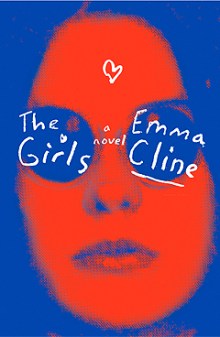
The Girls is one of those now ubiquitous ‘not-quite-based-on-a-real-crime’ crime stories. I was put off by the name and the fact that it was related to a real crime, and actually that was wrong of me.

Unlike many other books with the word ‘girls’ in the title, this book is indeed about girls (not adult women, e.g. The Girl on the Train, Gone Girl, The Girl with the Dragon Tattoo). A group of American teenagers, following Evie, a fourteen-year-old not so much taken in by a charismatic cult leader but by one of his many devoted female followers and sexual partners, the seventeen-year-old Suzanne.

The reason this novel worked for me was that it wasn’t so much about just gawping at the crime element (which was an analogue for the Manson Family Sharon Tate murder) but about women, and the pressures that society puts on women, and how women come to learn about their sexuality. I found it engaging, honest, tough reading – in the best way. It was well written, and I tore through it in a couple of days.

It’s not exactly easy reading – definitely worth noting that it contains a lot of sexual assault and, of course, the murder – but it’s a truthful and absorbing look at one atrocity in the context of a world in which women are always caught in a web of competing obligations and expectations. Check it out!

Louise CAV ReviewsReviewed by Louise

Find this book on Amazon

Jonathan Unleashed – Meg Rosoff

Rating: 5 stars

I love it when my hints work and I get given a book I’ve been longing to read. I heard parts of the Radio 4 Book at Bedtime serialisation of Jonathan Unleashed back in the early part of 2016, and it’s been on my wish list ever since.

My memories of the radio adaptation proved to be absolutely right and I loved this hilarious novel about Jonathan Trefoil, who’s living and working in central New York. His old friend Max has arranged for him to join him in working for Comrade, a marketing outfit for which Ed, the owner and boss, “in order to convince clients that Comrade [is] a highly creative organisation” has “purchased an entire communist-era Russian railway station at auction – from signal board to ticket office – and had it installed in the Tribeca loft”. This is Jonathan’s working environment; he’s in a rented flat and unsure if he’s really allowed to be living in it, and to complicate his life, while ensuring he gets plenty of exercise and company, his brother’s two dogs (Dante and Sissy) are living with him while his brother’s working abroad. And to make things more complicated still, his college girlfriend Julie announces she’s got a new job as a senior salesperson with Bridal 360 and will be moving in with him.

jonathan unleashed.jpg

Jonathan’s journey through the many complications in his life is complex and troubled and absolutely hilarious, particularly since Jonathan sees his life and the situations in which he finds himself in terms of comic strips and cartoons, to which he and Max have been addicted since they were children, even setting up their own business, MaxMan Enterprises. Jonathan’s imagination constantly lets rip and turns reality into a series of comic strips, which includes Dante and Sissy disapproving of his lifestyle. Things spiral completely out of control until finally the comic strip world becomes more real than the 3D version, while Jonathan pours out more and more drawings for a client – and at the final presentation to them has a complete meltdown.

This is the first book Meg Rosoff has published which is intended for an adult market, rather than for teenagers and young adults (such as How I Live Now and Picture me Gone, both of which I’d read and loved), and like her earlier works it tackles the tough subjects of the move from being a child to adulthood, and of how relationships work or don’t. She has the ability to control a large cast of characters, from Jonathan and his colleagues, to the vets, to the dogs, who play such a pivotal part in both the plot and our understanding of the people involved. The warmth Meg Rosoff feels towards her characters is genuine and we feel great sympathy for these young people trying to get to grips with being independent adults living in a hectic urban environment. I loved it, and I hope it’s the first of many more adult novels from her. In the meantime, I’ll be going back to read her earlier works again!

Daisy Chapter and VerseReviewed by Daisy

Find this book on Amazon

Erotic Stories for Punjabi Widows – Balli Kaur Jaswal

Rating: 4 stars

erotic stories.jpg

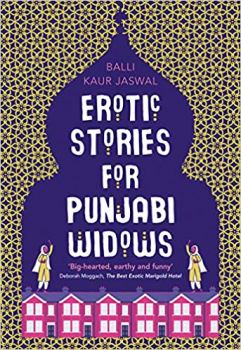
Balli Kaur Jaswal’s Erotic Stories for Punjabi Widows follows the women of a British Sikh community in London. Nikki is a young, very westernised Punjabi Sikh girl who lives over the pub where she works. She’s faced family despair and disapproval, but she’s still in touch with her mother and her much more conservative sister. She takes a job teaching a storytelling class at a gurdwara, only to find that most of the women there – all respectable widows of the community – can’t read or write in English, and turned up thinking that that was what they were going to learn.

Of course, as the title suggests, the class quickly descends into an erotica-writing group after the widows find a Mills & Boon in Nikki’s bag while she’s out of the room – managed as the women dictate to the one who can write in English, and the stories begin to spread. This plot becomes entwined with another: that of a girl who apparently committed suicide years ago, and of the conservative ‘Brotherhood’ who like to police the way women behave.

Erotic Stories for Punjabi Widows is funny and uplifting, a reminder that sex isn’t just for the young, and of the power and joys of the imagination at any stage of life. It’s also deeply engaged with the social issues facing Sikh women in Britain, but this doesn’t overtake what is, fundamentally, a story of hope. Yes, there are some things that feel more like wishful thinking than optimism, but I’d cheerfully forgive that, because anything else would spoil the joy of this book.

Heartily recommend for anyone looking to enjoy some awkward penis-vegetable metaphors and a heart-warming story about a community of women coming together.

Louise CAV ReviewsReviewed by Louise

Find this book on Amazon

The Good People – Hannah Kent: Lavinia’s Book Pick, June 2018

I recently enjoyed a lovely holiday out in the wilds, and Hannah Kent’s The Good People was the perfect read for the occasion – though I struggle to think of an occasion for which The Good People would be unfitting. It tells the story of a rural community in Ireland in the early nineteenth century. A community struck by a series of misfortunes, one of which includes a mute and ailing three-year-old boy, Micheál. In a tight-knit community, the gossip begins to spread as to the cause of this bad luck, and religion, community and ancient folklore wind together to a conclusion that is as troubling as it is inevitable.

the good people

The book is wonderful: immersive, detailed, tense. You get such a strong sense of the harshness of the way of life, and it’s easy to get drawn in to the beliefs of the community, especially when they often feel like the language for talking about the everyday misfortunes of a rural life without modern medicine. We follow Nóra, the bitterly grieving widow, Mary, the girl hired to help her in the house, and Nance, the local ‘wise woman’, peddling herbal cures and other unorthodox remedies that – according to the community’s own report – seem nonetheless to help more than they harm.

I would strongly recommend this book to all!

You’ll love this book if: 
– You have an interest in folklore
– You like an immersive historical novel

You might want to avoid this book if:
– You’re not interested in detailed descriptions of past ways of life
– You don’t like reading stories about people who are physically uncomfortable most of the time

Tweet me here: @lavinia_collins
And find me at my blog here: laviniacollins.com

lavinia collins authorLove Lavinia xoxo
Find this book on Amazon!

The Wonder – Emma Donoghue

Rating: 5 stars

the wonder.jpg

Yet another of my recent railway station purchases, I picked up The Wonder because I loved the film of Room, Emma Donoghue’s novel published in 2011, and hoped that this new novel would repeat the success of her earlier work.

This time Ms Donoghue has taken on an equally challenging subject matter. The novel is set in deepest rural Ireland at the time just after the potato famine. Mrs Wright, known as Lib to her family, is a Nightingale nurse, hired for two weeks private nursing work; on arrival, she finds that, along with another nurse (who is a nun, Sister Michael), she is to keep constant watch (morning, noon and night) on a girl who has for four months been refusing to eat, but who is being described as the Wonder.

Lib is told by the local doctor, McBrearty: “It’s a most unusual case… Anna O’Donnell claims – or, rather, her parents claim – that she hasn’t taken food since her eleventh birthday… No sustenance of any kind… She can’t take a thing but clear water.” And yet, “Anna walks around like any other girl… she hardly seems to have altered since April.”

Lib is immediately convinced that Anna must be a fraud, and that she will be able to work out within a very short time exactly how the girl is getting sustenance. Her family are poor and Anna is their only surviving child, her brother having died the previous year. Now Anna is being treated as a Wonder, and visitors are arriving determined to treat her as a miraculous presence, asking for her blessing and leaving offerings when they depart. During the two-week watch, things change, and it becomes clear to Lib and to a young journalist, William Byrne, sent by the Irish Times to write about Anna, that things have changed and the child is now not far off death. Has this resulted from the watch constantly being placed on her? Have the nurses unwittingly cut off the secret means by which she was getting food? The truth is shocking and, yes, Lib and Sister Michael have sadly caused things to come to this crisis point.

Emma Donoghue never fails to create credible rounded people in her works. Their worlds are as enclosed and trapped in The Wonder as they are in Room. Her descriptions of every bit of their surroundings, from the peaty landscape (into which poor Lib falls when trying to get some air and take a walk, only to discover how treacherous it can be) to the spirit house where Lib, Sister Michael and William Byrne are staying, and to the shabby home of the O’Donnells: “The cabin was in need of a fresh coat of whitewash; pitched thatch brooded over three small squares of glass. At the far end, a cow byre stooped under the same rood.” This family are clearly struggling to make ends meet and could surely do with the money which is being left by visitors come to see the miracle child in the iron safe by the door “for the poor”.

Lib and William see something in Anna which is rare and beautiful, brave and intense, loving and strong (even when she’s physically at her weakest), and in many ways they also see many of those same qualities in each other. Their story is moving and uplifting, and told with such tenderness that Ms Donoghue had me completely within her spell. Fabulous.

Daisy Chapter and VerseReviewed by Daisy

Find this book on Amazon


Eleanor Oliphant is Completely Fine – Gail Honeyman

Rating: 5 stars

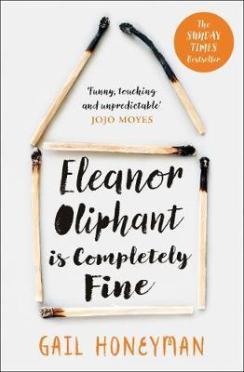
This book by Gail Honeyman was the winner of the Costa Book Awards 2017 for a first novel. And what a fine first novel it is.

Told in the first person, the narrator opens with a description of her everyday humdrum life, and I was gripped right from the outset. Eleanor Oliphant is nearly thirty and works in the accounts receivable office of a graphic design company. We know straightaway that her life has been difficult. She believes her boss, Bob, took pity on her when he employed her nine years ago: “I had a degree in Classics and no work experience to speak of, and I turned up for the interview with a black eye, a couple of missing teeth and a broken arm.” Clearly she’s had a difficult period in her life (to put it mildly) and now wants nothing more than a poorly paid office job and routine. Eleanor also tells us within the opening pages that her weekends are spent on her own drinking vodka, and that she speaks to her mother each Wednesday. She’s clearly lonely and troubled, but would admit to neither of these should she ever allow anyone the chance to talk to her for long enough to ask.

eleanor oliphant.jpg

Eleanor is a loner, annoyed by other people’s slovenly or imprecise use of language, keen to point out ways of saving money; now, though, having been given free tickets at work for a gig she’s felt obliged to use them and is on a mission to meet the singer in a band, whom she fantasises is “the one”. She sets about making improvements to her appearance and to her contact with modern life, teaching herself about the internet, Twitter and Instagram. Very soon we find ourselves wrapped in Eleanor’s world – the one that has gripped tightly around her for years – and the sudden changes that come about both from her mission to find out about and meet the singer, Johnnie Lomond, and from her actual meeting with the company’s IT expert Raymond Gibbons. By chance, she and Raymond get involved in the life of Sammy Thom, an elderly man whom they help when he has a fall, and his family. Bit by bit, Eleanor’s life changes and she discovers an ability to relate to people and feel an empathy she didn’t know she could ever feel.

Gail Honeyman slowly and delicately reveals the secrets of Eleanor’s past, always in Eleanor’s precise and careful voice, and describes her gradual and painful thawing and her difficultly in dealing with her own childhood secrets which she has for years hidden from herself in a tightly sealed box in her memory. She discovers that she has abilities and emotions she didn’t previously acknowledge or realise, and that she can learn to trust people and relate to them in ways she, at the outset, would have found completely impossible.

I was completely gripped by this book – I found Eleanor entirely believable and her life by turns sad and funny. At times the humour rings through so strongly that I laughed out loud, particularly at the situations in which she was placing herself in her quest for Johnnie. Her growing compassion for her fellow workers and other people she meets, such as Raymond’s widowed mother, rings true throughout. This is a beautifully written tale about loneliness, secrets, relationships, and trust. A well-deserved prizewinner.

Daisy Chapter and VerseReviewed by Daisy

Find this book on Amazon