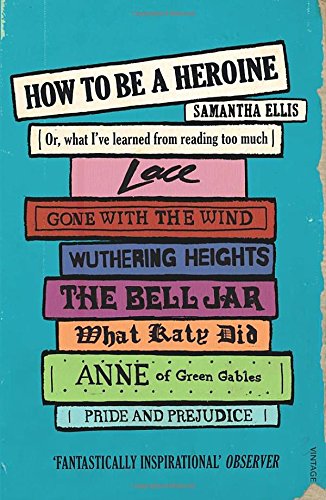
How to be a Heroine – Samantha Ellis

how to be a heroineHow to be a Heroine opens with the author recounting a good-natured argument she has had with her best friend Emma about the merits of Jane Eyre versus Cathy Earnshaw. Samantha Ellis is all for the passionate, wild and free-spirited Cathy and rejects Jane, while Emma thinks that Cathy is a silly snob who betrays Heathcliff for Edgar and a conventional life, and makes all three of them deeply unhappy by so doing, while Jane Eyre courageously goes her own way and finally marries Mr Rochester on her own terms. Samantha Ellis has had a lifelong dedication to Cathy and has read Wuthering Heights every year since she was a child, and has always thought that Cathy was her ideal heroine – but now she re-reads the book with fresh eyes and wonders if she was right to want to emulate Cathy. Should she really have been trying to be more like Jane, whom she now realises is not a meek and mild woman but a courageous one? After all, Jane bravely turns down both the offer to live in financial security with Rochester without being married once the truth about Bertha is revealed, and the offer of marriage from St. John.

Who is braver – Cathy opting for the comfortable life with Edgar or Jane facing financial insecurity in rejecting both these offers? The life of a single woman without money was hard beyond belief at the time.

This argument starts Samantha Ellis on a journey – revisiting her favourite fictional heroines, looking at them afresh, starting with her childhood love of Katy Carr (of What Katy Did and the other books in the series by Susan Coolidge) whom she now rejects as being a drip rather than a carefree rebel! Some of her heroines have stood her new test remarkably well, like Lizzy in Pride and Prejudice (my own Desert Island choice of books, and one to which I’ve returned time and time again), while others definitely don’t stand her new scrutiny and are rejected. In Gone with the Wind, Scarlett is replaced as Samantha’s chosen heroine by Melanie. Sara Crewe of A Little Princess is knocked off her pedestal for Ms Ellis by her pleasure at Becky, with whom she’s shared the attic in so many difficult times, becoming her “delighted attendant” once Sara is restored to her earlier wealthy lifestyle. (I differ on this – if she’d been many girls who’d grown up wealthy and returned to a wealthy lifestyle, she would have left Becky behind in the attic.)

But that’s one of the joys of this book – it made me read A Little Princess again and think about it in a new light, although I still came to the same conclusion. Samantha Ellis has made me want to re-read several more of my old favourites – books I’ve not read for many years. In Tess of the d’Urbervilles, Hardy created an extraordinary heroine – a woman of indomitable spirit and strength in facing the realities of her hard life. “Poverty and censure only make her stronger”… “She goes to her arrest like a goddess”, to quote Ms Ellis. It is not at all surprising that Hardy wept when he (spoiler alert) “killed off” Tess. Many of us weep whenever we read this.

The other great joy of How to be a Heroine is the author’s ability to make her readers want to join her through reading books they’ve not previously read. I’ve never, perhaps to my shame, read Sylvia Plath’s The Bell Jar, but now it’s rapidly headed to the top of my to-read list, along with Little House in the Big Woods, Cold Comfort Farm and South Riding. How have I never read any of these? I blame my old-fashioned English degree, in which anything past 1900 was considered too modern to be worthy of our attention. Samantha Ellis sums up her feelings for these novels and their heroines in such a clear, pithy style that she’s made me want to read more, to find out if I agree or disagree with her. I’m sure she won’t mind at all if her readers do disagree – I’m sure that what she wanted with this book was to get people reading her favourite books. After all, this quest for her started with a debate with her friend Emma about Wuthering Heights and Jane Eyre. The important thing is that we read books and think and talk about them.

Woven into her journey through her favourite books, Samantha Ellis gives us her life story; she’s the heroine of her own book in many ways. She’s a playwright and journalist, a Cambridge graduate who defied her family who wanted her to stay in London for her studies, and who has battled with epilepsy since being a young adult.

In short, if you love books I strongly recommend this as a stimulating and thought-provoking read. I defy you to read it without wanting to add more books to your to-read list!

Rating: 5 stars

Daisy Chapter and VerseReviewed by Daisy

Find this book on Amazon


Hollywood Hearts Ablaze – Kris Ashton

hollywood hearts ablazeGina Hall is a Hollywood executive producer and one tough lady. She uses the casting couch at the ripple of a pec, and if a wannabe actor doesn’t perform he’s history. Poor Tony Cantori, desperate for a part, is easy meat, “like a good meal, filling, satisfying” but disposable. Even Winkles, her cat who shares her penthouse, is “sleek, black and lithe”.

Then along comes Jack Triton with “his jutting, hard jawline and thespian smile”. At first he is affronted by the casting couch and with “his head high above his broad shoulders” he “leaves with angry strides”.

But all is resolved over real movie talk, the gym and “naughty” hamburgers:

Jack bit into his hamburger, a beatific expression passing across his face.
‘Mmm, grease,’ Jack said. ‘It’s been a long time.’

They get together and are forced apart. Will they be together at the end?

The movie industry and some thin sub-plots lurk in the background. Gina oversteps the mark and is demoted. Will she recover? Will she learn? Grow up?

It’s a quick read and has entertainment value, and I guess that’s all that’s intended. If you are put off by the following, it’s probably not for you; but if this appeals, tongue in cheek or not…

She tugged… and his tent-pole popped free

A lustful sound that approached disbelief

His words hung there like rotting carcasses

Denim-clad shaft

Enjoy!

Rating: 3 stars

CAV Profile RichardReviewed by Richard

Find this book on Amazon

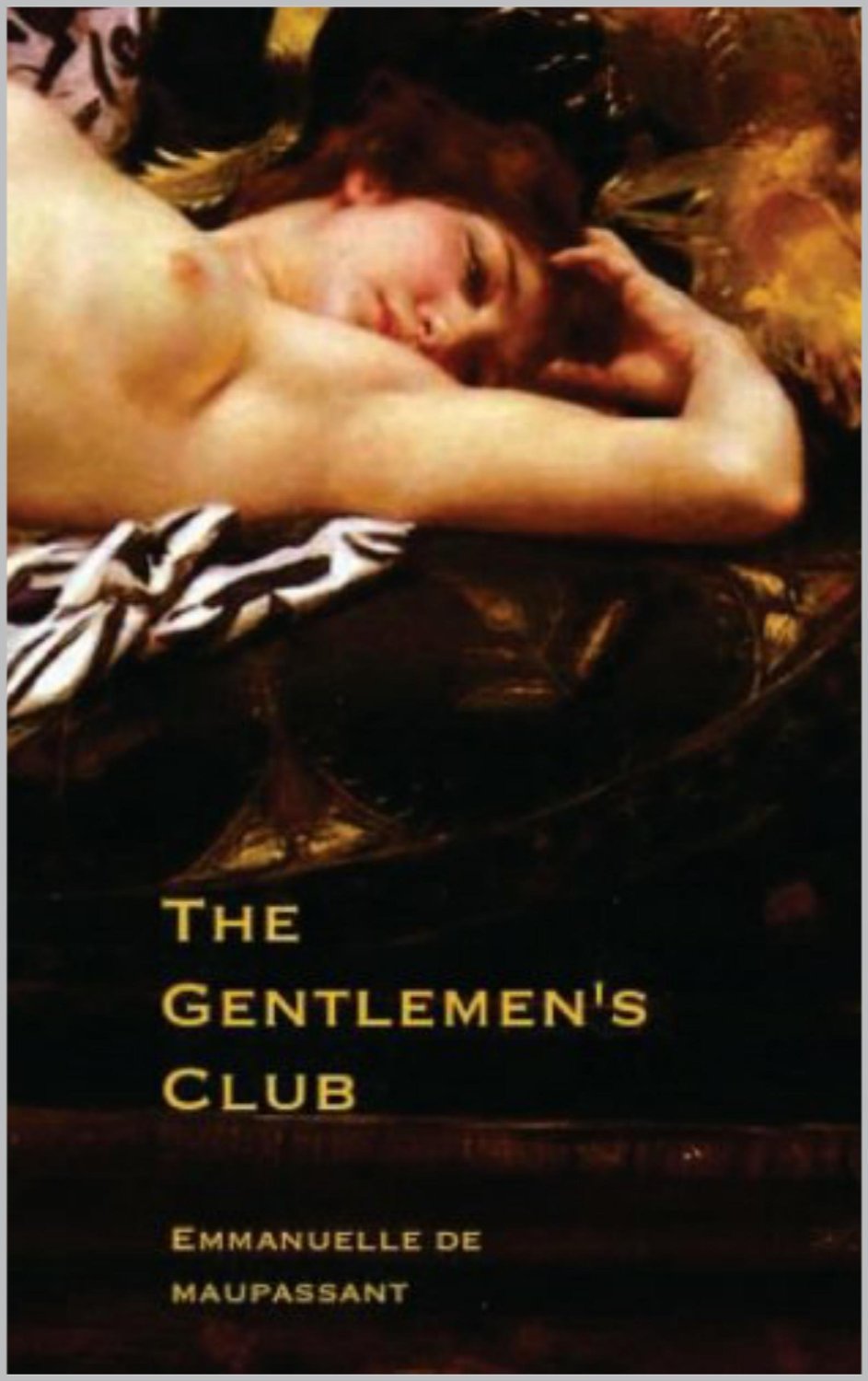
The Gentlemen’s Club – Emmanuelle De Maupassant

gentlemen's clubSo I downloaded this erotica after seeing it listed on a BuzzFeed list of books that are sexier than Fifty Shades of Grey. Well, I can certainly 100% say that it was better than Fifty Shades of Grey.

That out of the way, was it completely my thing? Not really, to be honest. There was a little too much of a proclivity towards awkward metaphors for me (‘truncheon’, ‘jungle’), although perhaps others might like that. Me, I like my cards on the table when graphic sex scenes are the order of the day.

However, there was a lot to recommend this. It’s very atmospheric (think The Ruby in the Smoke, but instead of intrigue and murder just sex sex sex), for a start, and certainly feeds perfectly into our fetish for just the right kind of kinky Victoriana – what everyone hopes was secretly going down (as it were) while the general population were pretending to be repressed. If you want tight corsets and silken whips then you’re right on the money with this one. It’s short, sharp and packed with sexy-business, so a definite recommend.

There was also an interesting emphasis on affirmative consent. Now, this really stuck out when I read it. Perhaps it shouldn’t have done. It seemed somewhat laboured against the backdrop of “no means yes” Mills & Boon and the downright rapey sex in parts of Fifty Shades to have all of the women being asked if they wanted it, and affirming their consent. But why should it have done? And it certainly didn’t spoil the atmosphere. It really made me think about what we “read” as coercive in erotica. This was refreshingly affirmative, and what was offered up as sexy (and what was sexy) was an embracing of female desire and an affirmation of female sexual agency.

Was this a crie de coeur for feminist sexuality? I suppose so. But the point is, it was that without compromising on any of the generic must-haves of erotica. It was that without pushing that button explicitly in its writing. This stuff should be normal. It’s the other side of the coin, and it’s high time female desire had its voice.

Rating: 4 stars

Louise CAV ReviewsReviewed by Louise 

Find this book on Amazon

Elizabeth is Missing – Emma Healey

elizabeth is missingI reckon that many fiction publishers have latched onto the fact that there are a lot of very keen readers for novels which switch between different times and different narrators. In the case of Elizabeth is Missing, it’s actually the same narrator – Maud – but in a voice much altered by the passage of time, so that the effect is almost of two distinctly different people.

Or so it seems at first. The more you read, the more you see the similarities between the younger and older person. Maud as the older narrator is suffering from dementia and her voice and obsessions have become simple and child-like. She can no longer remember what she’s done earlier in the day, but parts of the distant past have become crystal clear to her. Maud is now obsessed with trying to find her friend Elizabeth, whom she is convinced is missing through some ill treatment. Maud repeatedly goes over the same ground (literally), going back and forth to Elizabeth’s house and, apparently, to the police station to report her disappearance. Maud writes herself notes to try to aid her memory and to keep a record of the important facts she’s convinced she’s discovering.

Maud’s present-day journeys awaken memories of her sister Sukey and of her efforts to find her when she went missing many decades before. In her search for Elizabeth, Maud discovers the truth, or at least a part of the truth, about Sukey’s disappearance. The younger Maud had become ill and was protected by her parents, and now that she is old it is her daughter and granddaughter, Helen and Katy, who are trying to protect her. Time and time again we see struggles within families with different generations attempting to look after parents living in difficult situations or fighting mental instability or infirmity. Young Maud’s family had a lodger, Douglas, whose home had been bombed out and who was secretly trying to protect and look after his elderly “mad” mother, while also repeatedly hunting for Sukey.

All the characters in Elizabeth is Missing are coping with the loss of a loved one and/or the loss of possessions and a home. Sukey’s husband (and possible nemesis) Frank, goes from being surrounded by an abundance of possessions – so many that it’s hard to move around his house – to having nothing and being reduced to living on the outside of society. Maud, too, both as a child and as an old woman hoards possessions, whether these be oddments which she regards as clues found while walking and looking for her sister or for Elizabeth, or tins of peaches. Like Frank, like the bombed-out Douglas and like Elizabeth, she is finally inevitably reduced to having to have very few possessions.

Emma Healey deals with these ideas with clarity and sympathy, without ever losing sight of her current-day or older characters or plots. To anyone with older relatives or with close friends or family members with mental health problems, this can be a difficult book to read, being at times painfully honest about the problems faced in a relationship where communication has often broken down to the extent that one side no longer recognises the identity of the other. This is the well-deserved winner of the Costa First Novel Award for 2014, and I look forward to reading more from this terrific new talent.

Rating: 5 stars

Daisy Chapter and VerseReviewed by Daisy

Find this book on Amazon


On a Small Island – Grant Nicol

When the author sent through the review copy of this book, he said, ‘I hope you enjoy it.’

on a small islandEnjoy’ is the wrong word. In fact, I don’t think I’ve ever been more upset or unsettled by a novel. Grant Nicol tells the story of Ylfa, a free-spirited but directionless young woman living on her own in Reykjavik. When a young man is horribly murdered on her father’s farm she is determined to unravel the mystery. However, she isn’t prepared for what follows. What should have been an isolated incident spins into a dark and crooked tale involving kidnapping, arson and rape.
At its heart, On a Small Island is about our inability to escape our past. The setting in Iceland is perfect, and Nicol gives a wonderful sense of the claustrophobia of a small community. The denouement is unfortunately handled a little too quickly, but the book remains gripping throughout.

I’m not sure I can say all that much more without giving too much away. Read this book. Just don’t expect to sleep easily for the next week or so.

Rating: 4.5 stars

profile2Reviewed by Nick

Find this book on Amazon

Author Guest Post! Ten Fantasy Novels You Must Read (Or Re-read) – Part 1

Lavinia Collins, author of Arthurian #1 bestselling fantasy romance The Warrior Queen, picks her top ten must-read fantasy novels. Expect Part 2 at the same time next week!

She regularly blogs here, and you can follow her on Twitter here


mists of avalon10. The Mists of Avalon – Marion Zimmer Bradley

I have to recommend this one. It’s like my moral duty. Oddly enough this book was something of a sexual awakening moment for me. I was only eleven when I read it, which probably goes some way to explaining why I have ended up writing in the genre that I’m in…


9. The Dark is Rising – Susan Cooperdark is rising

If you didn’t read this as a child, read it now! Seriously, go away now and read it. It’s dark, it’s engrossing, it’s perfect in every single way.


sabriel

8. Sabriel – Garth Nix

A great young adult fantasy, from before when YA was zeitgeisty. A necromancer’s daughter has to step into his shoes when he dies unexpectedly, helped only by a talking cat, and a naked man who has forgotten his name. Wonderful; a whole world to fall into, and the right mix of gritty “real life” YA drama along with the magic.


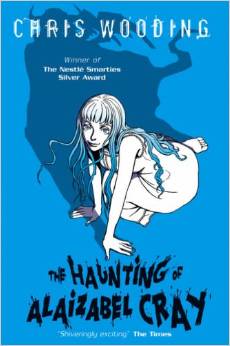
7. haunting alaizabel cray The Haunting of Alaizabel Cray – Chris Wooding

Ghosts and ghouls and everything in between in a fantasy Victorian London. Sure, it’s a tune we’ve heard before, but The Haunting of Alaizazbel Cray is a particularly fine version of that tune.


mirror_dreams_uncut6. Mirror Dreams – Catherine Webb

No one has ever heard of this book. As a child, I read it in one day on a camping holiday. It is, truly, one of the best books I have ever read. There’s a world we go to when we dream, and the dream wizards have to keep the nightmare people out. So far, so pedestrian. But enter the hero: Leanan Kite accidentally defeated the Lord of Nightmare as a young man, but now he’s getting older, and he wants to be left alone. When dark forces begin to threaten again, suddenly the pressure is on him to repeat what he miraculously managed before. It’s a subtle, skilful narrative of an unlikely hero who’s crippled by other people’s expectations. It’s touching, the magic world is immersive and I am so so sad that it seems to be out of print now. It is one of the best novels I have ever read.

Go to Part 2 now. 

lavinia collins authorGuest post by Lavinia Collins

Lavinia Collins is the author of Arthurian #1 bestselling fantasy romance The Warrior QueenShe regularly blogs here, and you can follow her on Twitter here

Conquests – Emily Murdoch

In many ways, this was a charming noveemily murdochlla with much to recommend it. Certainly, post-conquest Britain is a fascinating and under-represented time in historical fiction, and Murdoch clearly knows her stuff. The historical setting is there. But I felt there were also a few issues with the novella.

First, and this is just an irritant really, it hadn’t been properly edited. Seasons get muddled, dresses change colour, and some grammatical errors persist. All of these things distract from the story, and could have been easily prevented.

And then we come to the main plot, and the characters. This was the sticking point for me.

In the main, though, I think the issue is that this book has been improperly marketed. Look at that cover; you’re thinking Philippa Gregory, right? Well, if you’re looking for dashing rakes and heaving bosoms then I’m afraid you’ve come to the wrong place. Phillippa Gregory Murdoch ain’t, despite what the publisher’s blurb claims. This book isn’t an adult romance. That’s not necessarily an issue. Plenty of people prefer their love-tales chaste (and this is SERIOUSLY chaste – they marry and then there’s one kiss, and LOTS of talking about the kiss), but for readers like myself who prefer a little heat in their romance, this isn’t the way to go.

But what I do think is that this book would be perfect for a tween and teen audience. It’s basically Jacqueline Wilson does the Norman Conquest. There’s lots of chaste romance, talking earnestly about issues, and a nice, goody-two-shoes narrator. Think Girls In Love, but with Normans and Anglo-Saxons. No, no, it’s more chaste than Girls in Love. But anyway, you get the point – it’s short and sweet in a way that would appeal to girls in the 11–15 age bracket.

So, in essence, this book wasn’t for me, but it had a lot to recommend it, and it would suit a younger audience than the one it is marketed towards. I think the publishers made an error suggesting it for fans of Philippa Gregory, and I think someone in the editing process really dropped the ball. But it’s worth a look for teens, if you don’t want them reading about exactly what Henry VIII liked to have done to him in bed yet. 

Rating: 3.5 stars

Louise CAV ReviewsReviewed by Louise

Find this book on Amazon

We Are All Completely Beside Ourselves – Karen Joy Fowler

completely beside ourselvesThis was, without a doubt, one of the best books I have ever read. And it kind of snuck up on me. I wasn’t overwhelmed by the opening. It was an easy read, entertaining. I thought it would be some family drama about missing kids and broken homes. I thought I knew what was coming. First of all, I didn’t see the twist coming (oh boy, it’s a good one!), but more than that, the twist doesn’t dominate the story. It doesn’t reduce it in any way. And I won’t spoil it. Anyway, it doesn’t matter. I mean, it does matter, but the book both is and isn’t about what the twist is about (read it, you’ll understand). In a roundabout, conversational, honest, delicate way, the book manages to be about what it means to be a woman in the world as we know it. What it means to be anyone (although a lot of it is focused on women). And that’s another thing. The book manages to be about female experience without being like THIS IS THE BOOK WHERE WE TALK ABOUT WOMEN AND WOMEN THINGS AND WHAT THEY DO. As it should be; it is a book that acknowledges the problems of being a woman, and the anxieties of being a woman, without letting that dominate. It was all part of the story. As it is in real female experience. And the whole book was like that: subtle, delicate, engaging, emotional. It was funny and light as well as moving and thought-provoking. I really can’t recommend this book enough.

Rating: 5 stars

Louise CAV ReviewsReviewed by Louise

Find this book on Amazon

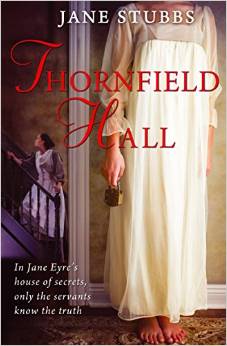
Thornfield Hall – Jane Stubbs

thornfieldIf you’re a fan of Jane Eyre, you’ll either love or loathe this book. It’s the story of Thornfield Hall viewed from the perspective of Mrs Fairfax, the discreet housekeeper who is mentioned in Jane Eyre, but who here takes centre stage. The familiar story of Mr Rochester and his “mad wife” are told from an entirely new direction, and this time it’s a completely different take on his first wife from that given either in Charlotte Bronte’s novel or from that in the more modern classic Wide Sargasso Sea, by Jean Rhys.

Mrs Fairfax as portrayed by Jane Stubbs has a strong and credible voice – she’s a parson’s widow and a gentlewoman who has fallen upon hard times and has had to seek employment for the first time as a paid housekeeper to a distant relative – Mr Rochester senior. On the death of her “first Mr Rochester” (soon after the death of his own elder son Rowland), young Edward Rochester has to return from Jamaica to take up his responsibilities at Thornfield Hall – bringing with him “an unfortunate invalid who suffers from great weakness of mind” as he describes Bertha in a letter to Mrs Fairfax. (That’s not the description we’re accustomed to hearing of the wife locked in the attic rooms of the Hall!)

Mrs Fairfax’s words lead us through the familiar story but explain key events such as the fire in Mr Rochester’s room in an entirely different way. The novels shows us how “mad” Bertha Rochester lived for many years quietly in the seclusion of the isolated house on the moors, forming relationships with the servants who were her regular companions, taking care of her and of the house and grounds, frequently in the absence of their master. Jane Eyre herself is a relatively minor character in this version of the story, entering into it well into the second third of the novel. The main interest is in Mrs Fairfax herself and in the Hall, the destruction of which is now reinterpreted, so that poor Bertha is no longer seen as to blame for the devastating fire which sweeps through it. As for the famous “Reader, I married him…” ending of Jane Eyre, this novel stops short of showing us that moment or indeed Jane and Edward’s future, instead revealing a very different view of what might have happened after the fire.

Jane Stubbs’ clever book shook up my ideas of both the story line and the characters, and gave me a whole new but connected world of people and events. I loved it and would be fascinated to see Jane Stubbs’ or other writers’ takes on other well-known classics. Anyone want to have a go at the story of another famous fictional Fairfax – Jane Fairfax in Emma?

Rating: 4 stars

Daisy Chapter and VerseReviewed by Daisy

Find this book on Amazon

A Spy Among Friends: Kim Philby And The Great Betrayal – Ben Macintyre

a_spy_among_friendsSo you thought you knew the Kim Philby story. You thought that everything that could have been dredged up from the murky depths of twentieth century espionage had been. Think again. This brilliant and gloriously well-researched account of the most successful of all spies will shock you.

Single-handed, Philby rendered much of the CIA’s and MI6’s efforts in the post-war period useless and self defeating. He didn’t pass secrets to the USSR at the height of the cold war; he delivered them by the truckload. Everything we knew, they knew, and many died as a result.

Philby was recruited to MI6 as a young, upper-class English gentleman and worked tirelessly for the USSR for thirty years. He was devoted to the communist cause which he placed above all other loyalties. This book is about how this most respected, charming and loved intelligence chief got away with it for so long. It’s about the trust between friends, class cohesion and at times breathtaking incompetence.

For years the ex-coppers and poorly dressed grammar and minor public school-boys of MI5 (give or take the odd Etonian) knew that he was a spy, but he was protected by the Savile Row-suited, highly born spooks in MI6. Some, like his best friends and colleagues, could not believe the stack of circumstantial evidence which mounted over the years. Others believed it but couldn’t bring themselves to reel him in and face the catastrophe which would befall the establishment and the government.

The book reads like a thriller. The twists of the plot are almost incredible. MI6 really was the wild west: having the time of their lives with taxpayers’ money, living like licensed princes in secret intelligence stations all over the world. Industrial quantities of booze, drunken parties, a haze of women and cigar smoke. (Shocking, eh!) No wonder they couldn’t see what was going on under their noses. Brave and professional though some of them were, it should never be forgotten what damage they did to British interests through their blind faith in one of their own. (Ho hum…)

It’s all a national disgrace, of course, but hey guys it was fun while it lasted.

If you want to know how the class system worked (and still works) in little old England, what a grubby little occupation spying is (but better than banking), how friendship can give a venomous bite, and how to write a first-rate thriller, read this book.

Rating: 5 stars

profile3Reviewed by Richard

Find this book on Amazon